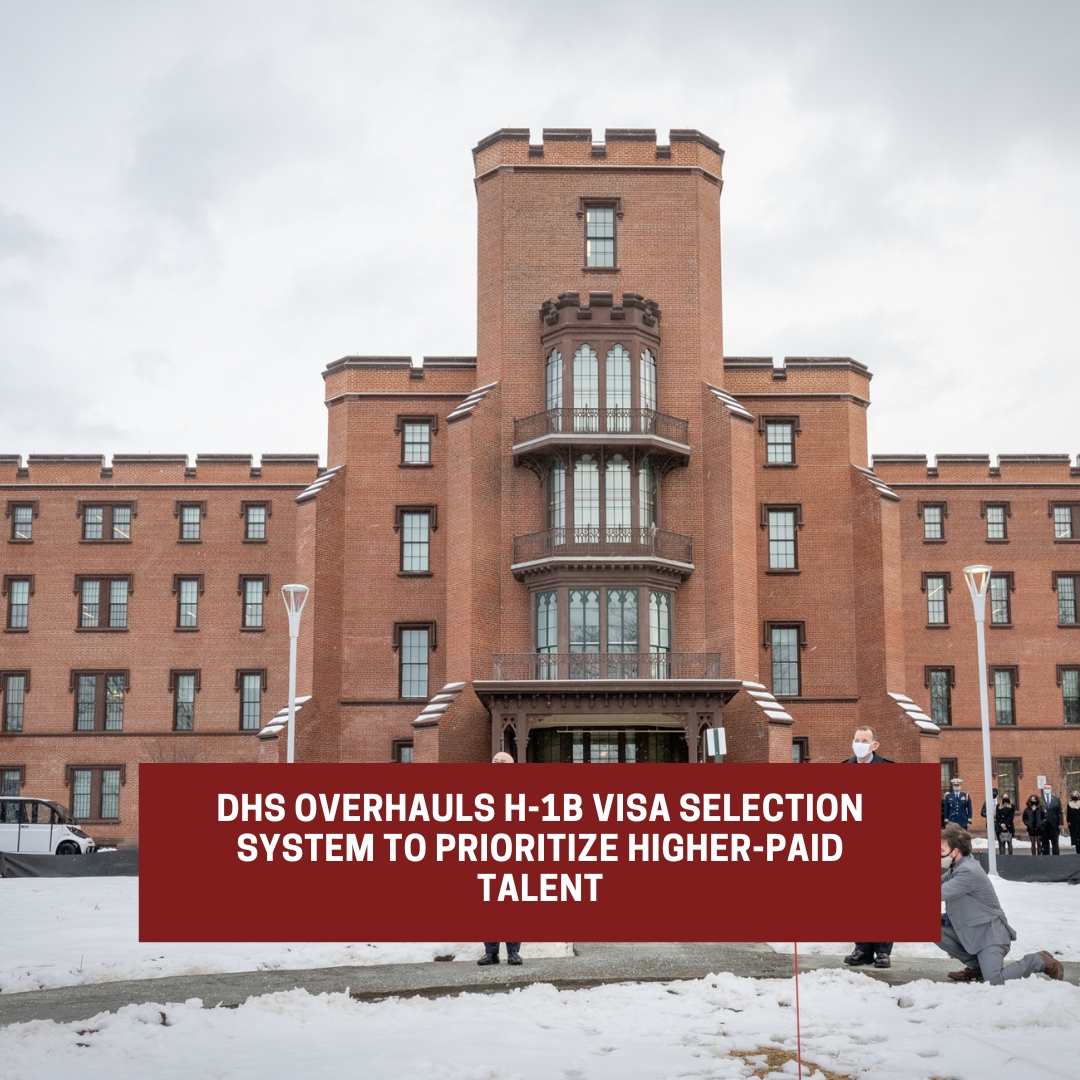
The Department of Homeland Security (DHS) announced significant changes to the H-1B work visa selection process. The new regulation eliminates the purely random lottery system and replaces it with a weighted selection model that gives greater priority to foreign workers with higher qualifications and higher wages, with the goal of protecting the income and job opportunities of U.S. workers.
You can also read. “Annual U.S. immigration balance: security, control, and policy changes during 2025”
According to U.S. Citizenship and Immigration Services (USCIS), the previous mechanism was exploited by some employers to hire low-cost foreign labor, to the detriment of the local labor market. Although the program maintains its annual cap of 65,000 visas, plus an additional 20,000 for individuals with advanced degrees obtained in the United States, the new system will increase the chances of selection for higher-paid petitions, without completely excluding other wage levels.
The rule will take effect on February 27, 2026, and will apply to the registration period for fiscal year 2027. This measure is part of a broader reform of the H-1B program promoted by the Trump administration, which includes stricter requirements for employers, such as the payment of higher additional fees, in order to prevent abuses and reinforce the priority of U.S. workers within the immigration system.
For more information on these topics, visit Paralegal Clases’ social media pages and join our live sessions every Wednesday.
Instagram: @Paralegalclases
Facebook: Instituto Paralegal de las Américas
Youtube: Instituto Paralegal
Tiktok: @Paralegalnews