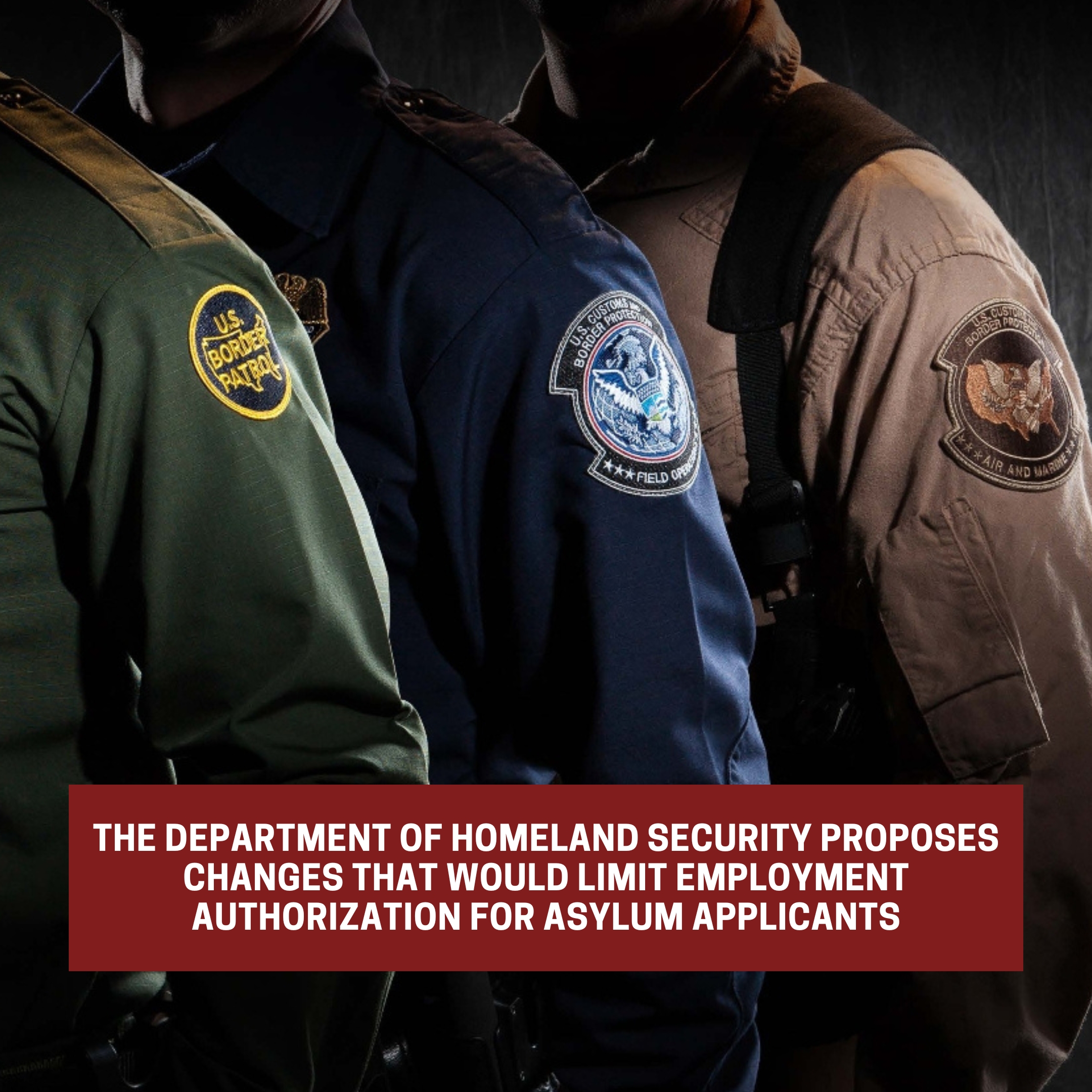
The Department of Homeland Security (DHS) announced a regulatory proposal aimed at modifying the eligibility criteria for employment authorization in pending asylum cases, as part of a strategy intended to reduce applications considered frivolous or fraudulent.
According to the official statement, the measure seeks to decrease the incentive to file meritless asylum applications whose primary purpose is to obtain a work permit in the United States. The proposal would involve adjustments both to filing requirements and to the eligibility conditions for those requesting employment authorization based on a pending asylum case.
You may also read. “The 75-country policy”
A DHS spokesperson indicated that the current system has generated a significant backlog at U.S. Citizenship and Immigration Services (USCIS), noting that there are currently more than 1.4 million pending affirmative asylum applications. According to the agency, the historic volume of applications has impacted processing times and the institutional capacity to handle other immigration filings.
The proposed rule would allow resources to be redirected toward reviewing accumulated cases and prioritizing asylum applications considered legitimate. Likewise, the measure falls within Executive Order 14159, titled “Protecting the American People Against Invasion,” promoted by President Donald Trump.
If finalized, the regulation would modify access to employment authorization while the asylum case is pending, strengthening verification and investigative processes for applicants.
What impact could this proposal have?
If approved, the changes could directly affect the timing and conditions under which a person with a pending asylum case may apply for or renew their Employment Authorization Document (EAD). This could influence immigration strategies, filing timelines, and case planning before USCIS.
For those who work in the immigration field or seek to better understand how these reforms could impact current or future applications, it is essential to study the technical details once the final version of the rule is published.
If you wish to deepen your understanding of the structure of the asylum system, learn how to interpret regulatory changes, and properly complete forms from an educational perspective based on official sources, Paralegal Institute of the Americas offers training programs designed to strengthen technical knowledge and regulatory understanding.
This content is for informational and educational purposes only. It does not constitute legal advice.
For more information on these topics, visit Paralegal Clases’ social media pages and join our live sessions every Wednesday.
Instagram: @Paralegalclases
Facebook: Instituto Paralegal de las Américas
Youtube: Instituto Paralegal
Tiktok: @Paralegalnews