Current state of the law (January 2026)
The Family Reunification Humanitarian Parole Program (FRP) is currently subject to federal litigation. The U.S. Department of Homeland Security (DHS) issued notices announcing the termination of the program for beneficiaries from several countries, indicating that the parole and associated employment authorization would expire on the earlier of their original expiration date or January 14, 2026, pursuant to a notice published in the Federal Register in late 2025.
You can also read. “The U.S. expands the Travel Ban and restricts entry starting January 2026”
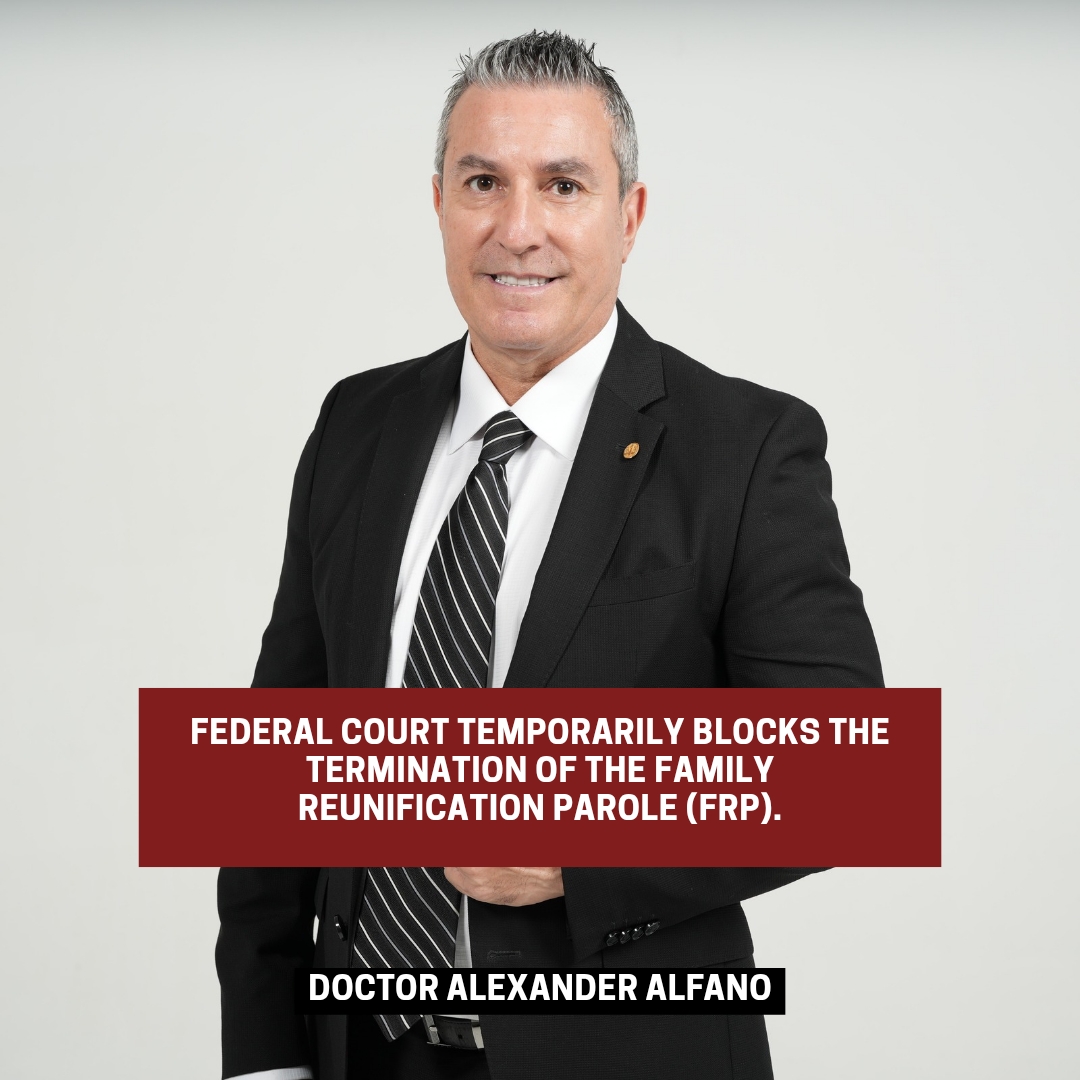
Judicial block on the termination of FRP
Federal Judge Indira Talwani of the District Court of Massachusetts temporarily blocked the termination of the program, finding that DHS likely failed to comply with legal requirements, including the duty of adequate notice and principles of procedural fairness. As a result, a temporary restraining order (TRO) was issued preventing the automatic termination of FRP status while the litigation continues.
The case, identified as Svitlana Doe v. Noem, challenges the termination of the program under the Administrative Procedure Act (APA). The current court order is temporary and may be modified or revoked at later stages.
Impact for beneficiaries
While the court order remains in effect, beneficiaries likely continue to maintain a valid humanitarian parole status, and the employment authorization should be considered valid, unless a court lifts the injunction. DHS may not enforce the termination of the program during this period.
Should the beneficiary leave the United States?
Given that the legal framework is evolving, the answer is not a simple “yes” or “no.” While the court order remains in effect, the beneficiary likely continues to be lawfully present and authorized to work. A voluntary departure could result in the loss of current legal relief and affect future immigration benefits. However, since this is a temporary measure, each case must be evaluated individually.
Recommendations
Consult immediately with a licensed immigration attorney or an Accredited Representative.
Closely monitor the federal litigation.
Do not leave the country solely in response to the DHS notice while the court order remains in effect.
Key summary
DHS attempted to terminate the FRP program effective January 14, 2026.
A federal court temporarily blocked that termination.
Humanitarian parole and employment authorization remain provisionally protected.
Departure from the country is likely not necessary at this time, but requires individualized legal analysis.
Do you need guidance on your case?
If you are a beneficiary of the Family Reunification Parole (FRP) and have questions about how this judicial decision may impact your immigration status or your employment authorization, the team at Financial Legal Group can guide you clearly and responsibly. Call or write to us at (786) 727-5242 to schedule a consultation.
This content is for informational and educational purposes only. It does not constitute legal advice. Each immigration case must be evaluated by an authorized professional.
By: Doctor Alexander Alfano
For more information on these topics, visit Paralegal Clases’ social media pages and join our live sessions every Wednesday.
Instagram: @Paralegalclases
Facebook: Instituto Paralegal de las Américas
Youtube: Instituto Paralegal
Tiktok: @Paralegalnews